
Key Takeaways
- Why Austin’s service economy may be one of the city’s most overlooked opportunities
- Why great businesses are often built on people and process rather than revolutionary ideas
- How Kade thinks about “sophisticating the unsophisticated”
- Why company culture has to extend all the way to frontline employees
- How AI can improve scheduling, customer insight, sales, logistics, and back-office efficiency
- Why retaining and delighting existing customers can become a company’s best growth strategy
- How Austin’s affordability and transportation challenges are changing service businesses
- Why entrepreneurs shouldn’t assume they “missed the boat”
- What traditional industries can learn from Austin’s technology ecosystem
- Why Austin must protect its culture, community, live music, outdoor spaces, and entrepreneurial openness as it grows
Meet the Guest – Kade Thomas
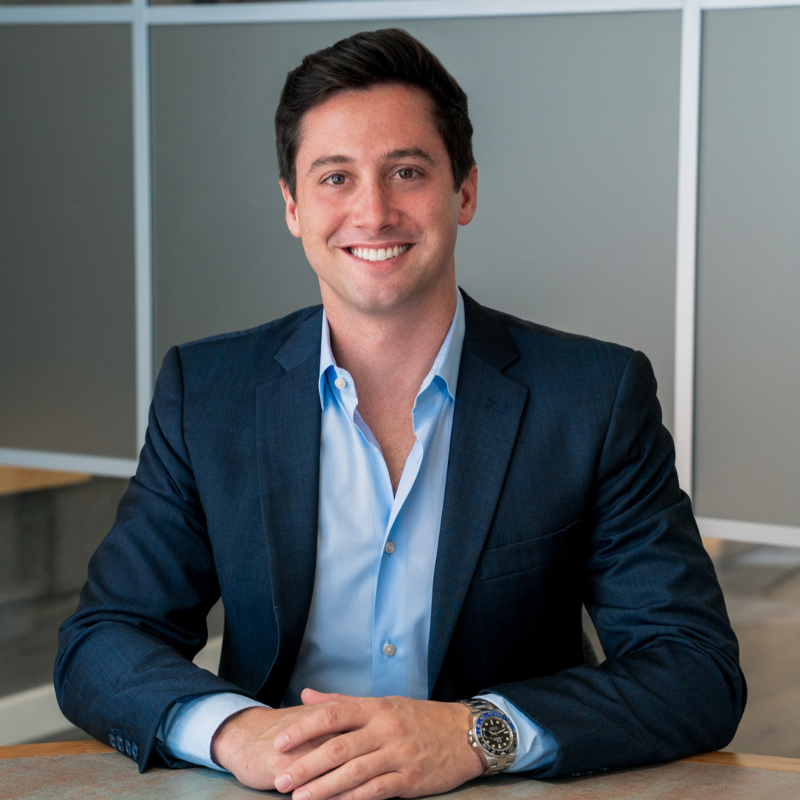
Kade Thomas is a builder and entrepreneur dedicated to transforming traditional industries through the lens of artificial intelligence and advanced technology. As the founder of Cerv Property Solutions and Emory Oak, his work centers on “sophisticating the unsophisticated”, taking legacy business models and rebuilding them into data-centric, high-growth platforms.
Rather than following a traditional corporate path, Kade’s work through Emory Oak serves as his private investment vehicle to scale businesses and niche real estate strategies from the ground up. This ecosystem is anchored by Cerv, where Kade and his team leverage proprietary tech and AI to redefine how property services are delivered and managed. By combining human expertise with robust, automated processes, Kade focuses on driving organic growth and operational excellence across the entire Emory Oak portfolio.
Kade’s “ground-up” philosophy is rooted in over a decade of hands-on operational experience. His entrepreneurial journey began at age 13 when he founded Lawn Pros, scaling the residential and commercial firm to a seven-figure business before a successful exit in 2014. He later acquired WLE, LLC, growing the commercial landscape firm to mid-eight figures before its acquisition by BrightView (NYSE: BV) in 2020.
An alumnus of the University of Texas at Austin’s McCombs School of Business, Kade remains an active leader within the university community. He serves on the Real Estate Center Executive Advisory Council, the Longhorn Foundation Advisory Council, and the DKR Advisory Board. Deeply committed to social impact, he is a board member for Ronald McDonald House Charities and the founder of the Emory Oak Initiative for Financial Literacy, which focuses on equipping others with the tools for financial independence.
Connect with Cerv Property Solutions and Emory Oak Partners
Show Notes
WWhat if some of the biggest business opportunities in Austin aren’t in startups, venture capital, or the next big app — but in the companies quietly keeping the city running?
In this episode of Austin Eras, Adam Flagg sits down with Kade Thomas, founder and CEO of Emory Oak Partners and Cerv Property Solutions, to explore the overlooked service economy underneath Austin’s explosive growth. Kade started his first landscaping company at just 13 years old, sold it while attending the University of Texas, and has spent the years since building, buying, scaling, and selling service businesses across the Southeast.
His philosophy is simple: “Sophisticate the unsophisticated.”
But this conversation isn’t really just about landscaping, janitorial services, pest control, or private equity.
It’s about where opportunity still exists in a city where many people feel like they already missed the boat.
Kade explains why the businesses maintaining Austin’s buildings, pools, landscaping, and infrastructure may offer some of the most durable entrepreneurial opportunities in the region — and why building a great company often has less to do with inventing something revolutionary than with assembling the right people, processes, culture, and technology.
Together, they explore:
- Why service businesses remain one of Austin’s most overlooked economic engines
- Why people and process matter more than having a groundbreaking idea
- How AI is transforming traditional service businesses
- Why Austin’s growth continues to create opportunities beyond tech
- How rising housing costs, wages, and traffic could reshape the city’s workforce
- What Austin needs to protect as it becomes wealthier, larger, and more technology-driven
The conversation also explores Kade’s relationship with the University of Texas, his work mentoring students and student-athletes, Austin’s hospitality scene, comparisons between Austin and other fast-growing Southern cities, and why entrepreneurship doesn’t require creating the next unicorn.
For anyone who has wondered whether Austin’s biggest opportunities are already gone, Kade offers a different perspective: the city is still being built, and many of the best opportunities may be hiding in plain sight.